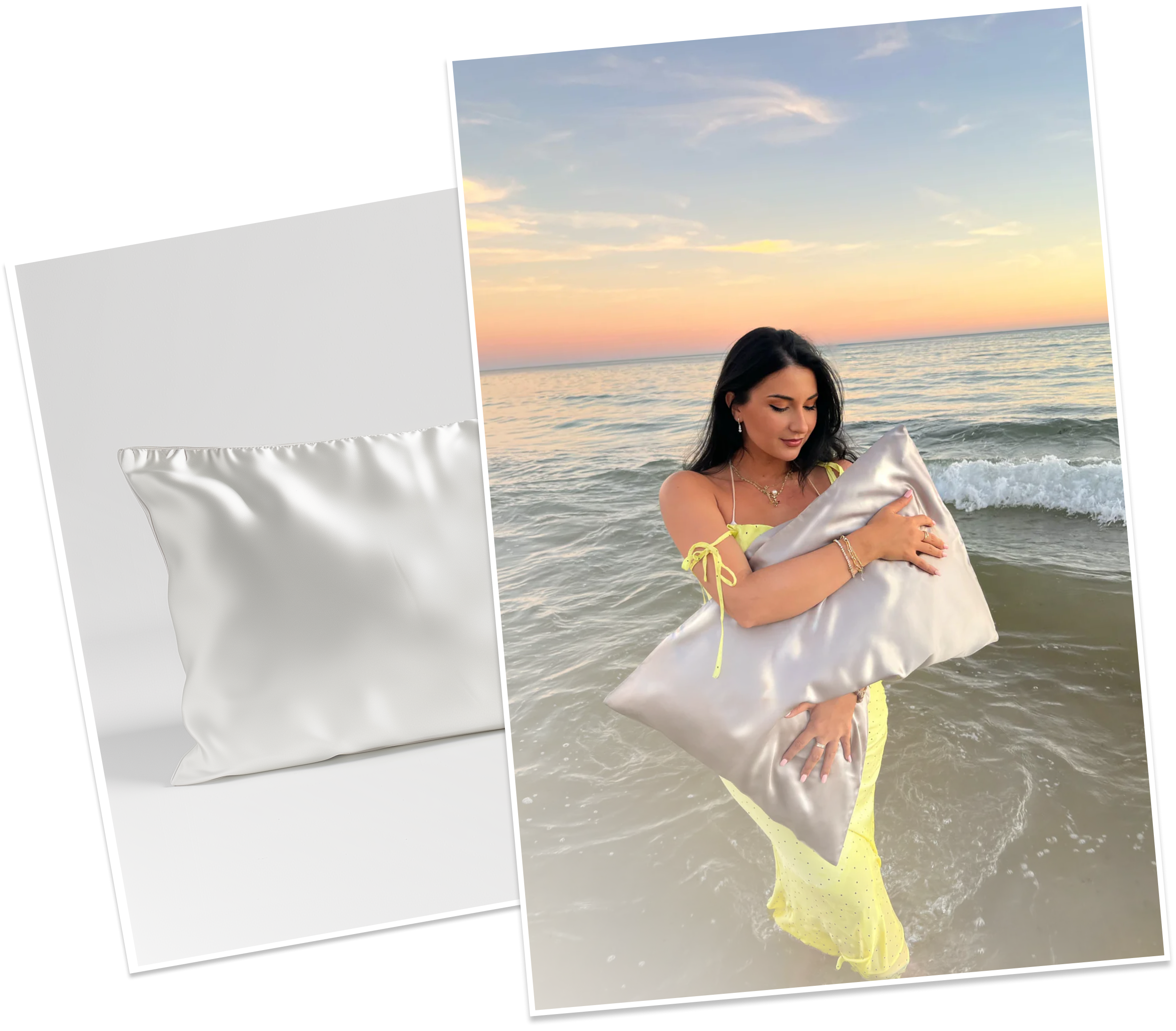

6 Protective Hairstyles for Sleeping to Prevent Damage
Loose braids, pineapple buns, and silk-wrapped twists cut down on tangling and frizz. If you wake up with lots of knots in your hair, check your nighttime routine first.
Why Hair Breaks While You Sleep
You might be moving more in bed than you think. Every shift drags your hair across the pillow. That friction adds up fast. Dry or fragile hair feels it the most.
A smoother sleep surface cuts that friction down. Protective styles work the same way. Loose hair gets pulled and rubbed all night. Contained hair doesn't.
You are just giving your hair less to fight against.
Choosing the Right Style for Your Hair Type
Pick a style based on length, texture, and how easily your hair tangles.
- Straight or fine hair: a loose braid or low bun works well
- Wavy hair: a loose braid keeps some texture intact
- Curly hair: a loose pineapple lifts curls off the pillow
- Coily hair: twists or a silk wrap need little handling
- Short hair: a silk bonnet does the job without braiding
If a style pulls at your scalp, skip it. It is probably the wrong one.
1. The Loose Braid

Start here if you are not sure where to begin. Braid gently. Don't pull at the roots. Tie the end with something soft, not a standard elastic.
A silk scrunchie from HoneyLux's scrunchies collection won't snag on the way off. Fine hair? Keep the braid extra loose. A tight one leaves a stubborn wave by morning.
2. The Pineapple Method
Curly and textured hair usually loves this one. Gather your hair loosely near your crown. Not the back of your head. Secure it so curls hang above the pillow.
A silk scrunchie holds the shape without gripping too hard. Curl definition varies from person to person. Give it a few nights before you judge it.
3. Two-Strand Twists
Twists take longer than a braid. They are still a low-manipulation option for textured hair. Section your hair. Twist each piece from root to end.
Twists don't make hair grow faster. They cut down on daily handling. Less handling means less breakage. Less breakage means you keep more length. Cover twists with a silk bonnet for extra protection.
4. The Silk Wrap or Bonnet

Some nights you want your hair left alone. Gather it gently. Wrap it in a silk scarf or tuck it into a bonnet. Check nothing pulls at your hairline.
A silk covering keeps hair off the pillow completely. No styling required. Pair it with HoneyLux's beauty sleep collection to make this an easy bedtime habit.
5. The Low, Loose Bun
Good for nights you don't want pressure on your scalp. Twist hair loosely. Secure it near the nape of your neck. Leave slack so it doesn't tug.
Too tight, and you'll feel it by morning. Falls apart by 2 a.m.? Move the placement. Try a softer tie. It usually takes a couple of tries.
6. The Loose Silk Scarf Wrap
The simplest option here. Try it if braiding isn't your thing. Gather your hair. Wrap a silk scarf around it. Don't pull at the hairline.
Tuck the ends in enough to stay put. No structure needed. No style to undo in the morning. Just less contact with the pillow.
Silk vs. Satin vs. Cotton
These three get lumped together. They shouldn't be.
Cotton is rougher than smoother fabrics. That roughness causes most of the tangling. Satin isn't a fiber at all. It is a weave. It can be made from polyester or from silk.
Silk is a natural protein fiber. Its surface is genuinely smooth. That is why it shows up in hair and sleep accessories built to cut friction. HoneyLux uses 6A grade, 22 momme mulberry silk across its accessories. That is a higher grade than most satin blends offer.
Mistakes That Undo a Protective Style
A gentle style can still work against you.
- Tying it too tight stresses your scalp
- A harsh elastic cancels out the benefit
- Skipping the cover leaves hair exposed anyway
- Repeating the same tension stresses one spot
- Braiding soaking wet hair stretches it while weak
Does This Actually Help Hair Growth?
Not directly. Growth happens at the follicle. No braid or twist changes that.
What protective styling does is cut down on breakage. Less breakage means you keep more of the length you already grew. Think length retention, not faster growth.
The best protective hairstyle is the one you'll actually keep doing. Comfortable beats perfect. Consistent beats abandoned after three nights.
FAQs
How tight should a protective hairstyle be for sleeping?
Loose enough that you don't feel it. Scalp pain means it's too tight.
Can I sleep with wet hair in a protective style?
Let it dry first if you can. Wet hair stretches easily and breaks faster under tension.
How often should I switch styles?
There is no fixed schedule. Rotate between a few so you're not stressing one spot every night.
Is a silk scrunchie better than a regular hair tie?
Yes. A standard elastic grips and snags. Silk just glides off clean.