
How to Get Rid of Frizzy Hair: 8 Proven Fixes for Every Hair Type
Getting rid of frizzy hair comes down to this. Reduce dryness and cut friction. Lock in moisture so the hair cuticle stays smooth.
You’ve seen it before. You step out of the house, hair looks fine. Then humidity hits. Maybe you are out in the sun for a short time, and suddenly there’s frizz everywhere. It feels random, but it’s not. There’s always a reason behind it.
The question of how to get rid of frizzy hair usually leads to a deeper, more important question. What is your hair missing?
Let’s find out.
Why Hair Turns Frizzy in the First Place
Hair becomes frizzy when the outer layer, called the cuticle, lifts up. Once that layer opens, moisture from the air slips in. The strand swells. Instead of staying smooth, it starts to puff and spread out.
You’ve probably seen this on humid days. Step outside in Miami or Houston, and even a fresh blowout can lose shape fast. That happens because dry hair pulls moisture from the air to balance itself.
But here’s the part most people miss. Not all hair reacts the same way.
It comes down to hair porosity
Porosity is how well your hair absorbs and holds moisture. Think of it like tiny doors along each strand. Some hair keeps those doors tight. Some keep them wide open.
That difference changes everything about frizz.
Quick porosity self-test (the float test)
Try this at home:
- Take a clean strand of hair
- Drop it into a glass of water
- Wait for 2 to 4 minutes
What it means:
- Floats on top → Low porosity
- Stays in the middle → Medium porosity
- Sinks quickly → High porosity
It’s not perfect science, but it gives a useful clue.
What each type means for frizz
Low porosity hair
The cuticle is tight. Moisture has a hard time getting in.
- Hair feels smooth but can still get surface frizz
- Products tend to sit on top instead of absorbing
- Light products and gentle heat help open the cuticle
High porosity hair
The cuticle is more open. Moisture goes in fast but escapes just as quickly.
- Hair frizzes easily, especially in humidity
- Feels dry even after conditioning
- Needs richer products to lock in moisture
Medium porosity hair
This is the balance point.
- Holds moisture well
- Less prone to frizz if cared for properly
- Responds well to most routines
How this connects to your routine
This is where things click. The same tip won’t work the same way for everyone.
- If hair is low porosity, heavy oils may just sit there and feel greasy
- If hair is high porosity, skipping leave-in products can make frizz worse fast
- If hair is damaged, friction and heat will amplify the problem
Common triggers that make frizz worse
Once porosity is clear, the usual causes become easier to spot:
- Lack of moisture inside the strand
- Too much friction from towels, pillowcases, or tools
- Heat damage from styling tools
- Rough or low-quality hair accessories
1. Switch to a Gentle, Hydrating Shampoo
What you wash your hair with matters a lot.
Harsh shampoos strip natural oils. When those oils are gone, hair becomes dry fast. That dryness leads straight to frizz.
What to look for:
- Sulfate-free formulas
- Hydrating ingredients like glycerin or aloe
- Mild cleansing agents
Also, don’t overwash. Washing every day can make things worse. Two to three times a week works better for most people.
2. Use a Wide-Tooth Comb Instead of a Brush

Many brushes pull through hair too aggressively. They stretch strands and can snap them, especially when hair is wet. That damage is not always visible right away. But over time, it roughs up the cuticle. Frizz shows up faster.
A wide-tooth comb works in a calmer way. It moves through hair instead of forcing its way through. That one change reduces stress on each strand.
Acetate combs take this a step further. They are made from plant-based materials and are carefully polished. This removes sharp edges and seams. So when the comb touches your hair, it feels smooth and even from start to finish.
The right way to detangle (this matters more than the tool)
Even the best comb won’t help if the technique is off. Most people start at the roots and pull downward. That creates knots and breakage.
Instead, try this:
- Start at the ends of your hair
- Gently work through small sections
- Slowly move upward toward the roots
This method removes tangles step by step. It puts less tension on the hair, which means fewer broken strands and less frizz later.
Why this works better
- Reduces friction while detangling
- Prevents static buildup
- Protects the natural structure of the hair
- Minimizes breakage over time
3. Dry Hair Without Creating Friction
Rubbing hair with a regular towel might feel quick. But it roughs up the cuticle. That creates instant frizz, even before styling begins.
Instead, try this:
- Gently squeeze out water
- Use a soft cotton t-shirt or microfiber towel
- Pat dry instead of rubbing
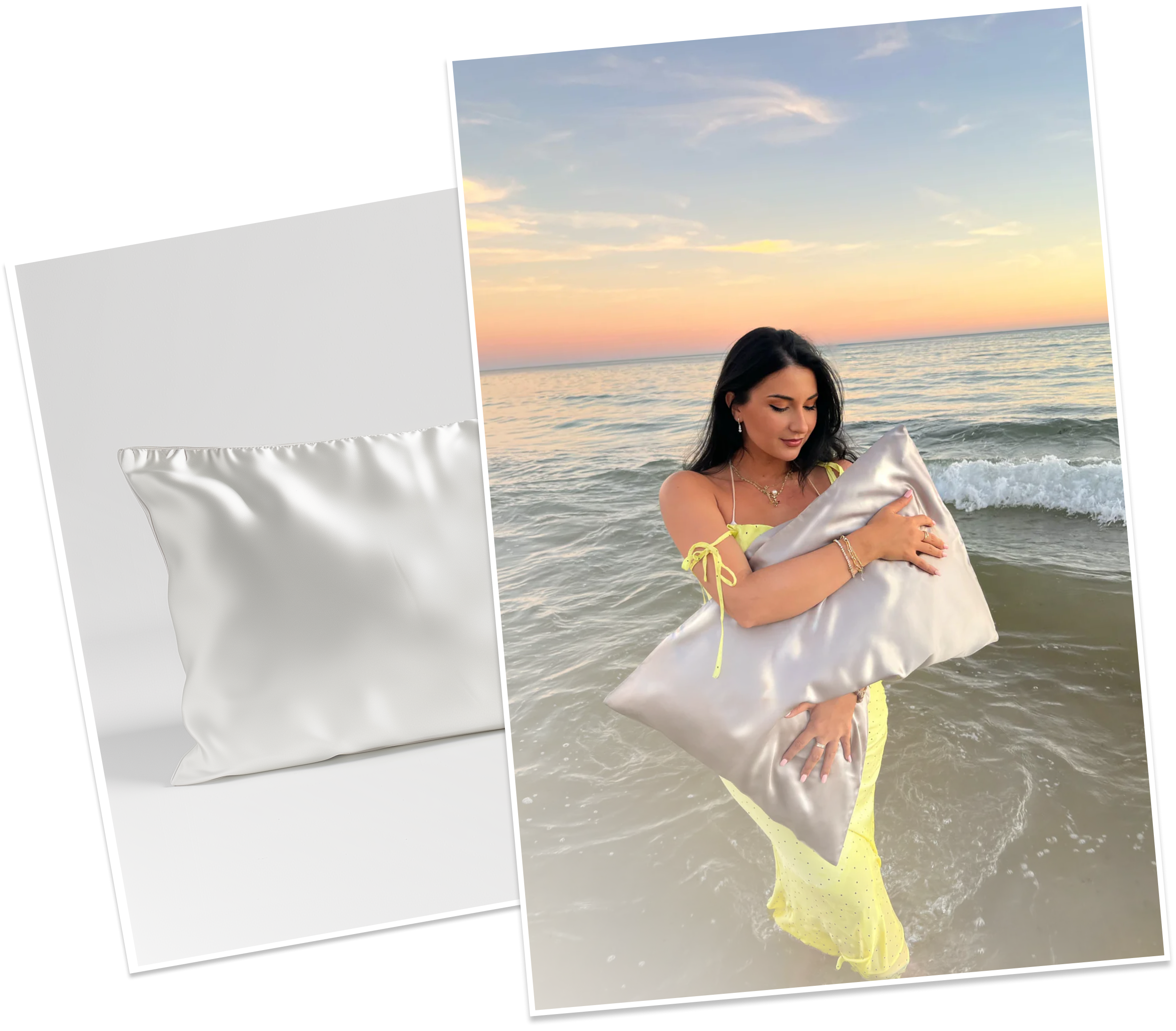
4. Switch to Silk for Night Care

Nighttime is when frizz quietly builds up. You don’t see it happening, but you feel it in the morning. Hair rubs against the pillow for hours. That constant movement lifts the cuticle. By the time you wake up, strands feel dry, rough, and harder to manage.
Cotton is the main reason. It creates friction. It also absorbs moisture from your hair while you sleep. So even if your hair felt soft at night, it can wake up thirsty and frizzy.
Contrarily, silk has a smooth surface that lets hair glide instead of drag. This reduces friction and helps keep the cuticle flat.
But not all silk is the same.
Why mulberry silk makes a real difference
High-quality silk, like mulberry silk, is made from long, uniform fibers. These fibers create a smoother and more even surface. That means fewer rough spots for hair to catch on.
Momme weight also matters. It refers to the density of the silk.
- Lower momme (like 16–19) feels lighter but wears out faster
- Higher momme (like 22) feels richer, smoother, and more durable
HoneyLux uses 22 momme mulberry silk. That weight strikes a balance. It feels soft but still strong enough for daily use. Over time, it keeps its smooth feel, which is what your hair needs most.
Silk vs. satin vs. cotton
|
Fabric |
What it’s made of |
How it affects hair |
|
Cotton |
Natural fibers |
Absorbs moisture, creates friction |
|
Satin |
Usually polyester |
Looks smooth but can trap heat and pull oils |
|
Silk |
Natural protein fiber |
Smooth, breathable, reduces friction |
Polyester satin may feel slippery at first. But it can trap heat and pull oils from the hair. Over time, this can lead to more dryness and frizz.
Silk, on the other hand, is a natural protein fiber. It is breathable and gentle. It supports moisture balance instead of disrupting it.
Easy upgrades that actually work
You don’t need a full routine change. Just switch what touches your hair at night.
- Silk pillowcases reduce friction while you sleep
- Silk scrunchies hold hair without pulling or creasing
- Silk turbans or wraps keep hair in place all night
Silk pillowcases, scrunchies, and turbans from HoneyLux are made with certified organic mulberry silk. Each product is designed to reduce friction and protect hair health over time.
5. Lock in Moisture with Leave-In Products
Frizz often shows up when hair is dry. So add moisture first. Then seal it so it stays in.
A leave-in conditioner helps smooth the cuticle. It adds softness and makes hair easier to manage. But moisture alone is not enough. If you don’t seal it, it escapes. Then the frizz comes right back.
The right way to do it (step-by-step)
- Apply a small amount of leave-in conditioner to damp hair
- Focus on mid-lengths and ends, not the roots
- Then seal it with a light oil or serum
- Let hair air-dry or style gently
This two-step method makes a real difference. The leave-in hydrates. The oil or serum locks it in. Hair feels smoother and looks more polished.
What works well
- Lightweight leave-in creams for daily use
- A few drops of hair oil to seal moisture
- Serums or anti-frizz sprays for humid days
But there’s one thing to watch closely. Glycerin.
Glycerin is a humectant. It pulls moisture from the air. That sounds helpful, but it depends on the weather.
- In high humidity, it can pull in too much moisture and cause frizz
- In very dry air, it can pull moisture out of your hair instead
So if the weather feels sticky or very dry, go easy on glycerin-heavy products.
Start small with any product. Hair responds better to light layers than heavy buildup.
6. Use the Right Hair Accessories

Hair accessories sit on your hair for hours. So even small details matter. Tight elastics and rough clips create constant tension. They pull at the roots and rub against the cuticle. Over time, that stress shows up as breakage and frizz.
But the issue is not just tightness. It’s also the material and size.
If a clip is too small, it grips too tightly. If it’s made from rough plastic, it creates friction at the contact points. That friction lifts the cuticle right at the root. This is called mechanical frizz. You may notice it as tiny flyaways near the scalp, even when the rest of your hair looks fine.
Why material makes a difference
|
Feature |
Cheap Plastic |
Acetate (Plant-Based) |
|
Surface |
Can have seams or rough edges |
Hand-polished, smooth finish |
|
Flexibility |
Rigid, snaps under pressure |
Flexible, bends slightly |
|
Friction |
Higher, causes snagging |
Lower, glides on hair |
|
Durability |
Breaks easily |
Long-lasting |
Acetate accessories are usually cut from solid sheets and polished. This removes sharp edges. So when they touch your hair, they feel smooth and even. That’s why they don’t tug the same way cheap plastic does.
Better swaps that actually help
- Silk scrunchies instead of rubber bands
- Acetate claw clips instead of brittle plastic clips
- Accessories with smooth, rounded edges
7. Protect Hair from Heat Damage
Heat styling is not the enemy. But unprotected heat is.
Flat irons, curling wands, and blow dryers can dry out hair fast. When moisture leaves, frizz steps in.
Smart heat habits:
- Always use a heat protectant
- Keep tools at medium heat
- Avoid daily heat styling
Think of heat like sun exposure. A little is fine. Too much causes damage.
8. Adjust Your Routine Based on Weather
What works in winter may not work in summer. Humidity changes everything.
On dry days, hair needs more moisture. On humid days, it needs protection from the air.
Quick adjustments:
- Use anti-humidity sprays in summer
- Add richer conditioners in winter
- Tie hair loosely on high-humidity days
Frizz Fixes Based on Your Hair Type
What works for curly hair may not work for fine or straight hair. So, it’s important to match your routine to your hair type.
Curly Hair
Curly hair is naturally more porous. It absorbs moisture quickly. But it also loses it just as fast. That’s why curls often look great right after styling, then frizz up later in the day.
Humidity makes this worse. The hair pulls water from the air, and the curl pattern expands.
What helps most:
- Use rich leave-in conditioners to lock in moisture
- Avoid brushing dry curls, as it breaks the pattern
- Sleep with silk wraps or pillowcases to reduce friction
- Use wide-tooth combs only when hair is damp
Curly hair does not need more water. It needs help keeping the right amount inside.
Wavy Hair
Wavy hair sits in the middle. It’s not as dry as curly hair, but it still reacts to humidity. Some days it looks smooth. Other days it turns uneven and frizzy.
The challenge here is balance. Too much product can weigh it down. Too little can leave it dry.
What works well:
- Lightweight leave-in creams or sprays
- Air-drying with minimal touching
- Gentle detangling with smooth combs
- Light oils only on the ends
- Straight Hair
Straight hair can still get frizzy. It just shows up differently. Instead of volume, you see flyaways and rough texture.
This usually comes from surface damage. Heat styling, friction, or dryness can lift the cuticle.
Best approach:
- Use heat protectant before styling
- Avoid rough towels and switch to gentle drying
- Use silk pillowcases to reduce friction
- Apply small amounts of serum to smooth flyaways
Fine Hair
Fine hair is often low porosity. It resists moisture. But when it does get affected, it can turn frizzy and flat at the same time.
Heavy products make it greasy. Light products may not feel enough. That’s where most frustration comes in.
What helps:
- Use very lightweight conditioners
- Avoid thick oils or heavy creams
- Detangle with smooth, static-free combs
- Keep styling simple and avoid buildup
Quick Comparison
|
Hair Type |
Main Frizz Cause |
What It Needs Most |
|
Curly |
Absorbs too much moisture |
Strong moisture lock |
|
Wavy |
Imbalance of moisture |
Lightweight control |
|
Straight |
Surface damage |
Smoothing and protection |
|
Fine |
Low absorption + buildup |
Light hydration, no weight |
Quick Routine That Actually Works
If everything feels overwhelming, keep it simple.
Daily basics:
- Detangle with a wide-tooth comb
- Use minimal heat
- Protect hair while sleeping
Weekly basics:
- Wash 2 to 3 times
- Deep condition once
- Check for dryness or buildup
Consistency beats complexity every time.
Common Mistakes That Make Frizz Worse
Sometimes it’s not about what to do. It’s about what to stop doing.
Watch out for these:
- Overwashing hair
- Using rough towels
- Skipping heat protectant
- Using low-quality tools
Each one seems small. But together, they create the perfect conditions for frizz.
Key Takeaways
- Frizz comes from dryness and lifted cuticles
- Gentle care keeps hair smooth
- Tools and fabrics matter more than expected
- Small changes can show fast results
Hair care is not about doing everything at once. It’s about doing a few things right, consistently.
So the next time frizz shows up, instead of fighting it, pause for a second and ask yourself
What is your hair really trying to tell you?
FAQs
Why does my hair get frizzy in humidity?
Hair gets frizzy in humidity because it pulls moisture from the air. When the outer layer of the hair lifts, water enters the strand and makes it swell. This causes the hair to puff up instead of lying flat. Dry or damaged hair reacts more strongly, so frizz becomes more visible in humid weather.
What is the best way to stop the frizz fast?
The fastest way to stop frizz is to smooth the cuticle and lock in moisture. Apply a small amount of leave-in conditioner first. Then seal it with a light oil or serum. Avoid touching your hair too much. Using a smooth comb and tying hair loosely can also help control frizz quickly.
Does silk pillowcase help with frizzy hair?
Yes, a silk pillowcase can help reduce frizz. Silk has a smooth surface, so hair glides over it instead of rubbing. This lowers friction during sleep. It also helps hair keep its natural moisture. As a result, you wake up with fewer tangles and less frizz compared to cotton pillowcases.
Why is my hair frizzy after washing?
Hair often turns frizzy after washing because the cuticle opens up when wet. If hair dries without enough moisture or protection, it becomes rough. Using harsh shampoos or rubbing hair with a towel can make it worse. Adding a leave-in conditioner and drying gently helps keep hair smooth after washing.
What hair type is most prone to frizz?
Curly and high-porosity hair are most prone to frizz. These hair types absorb moisture quickly, which causes swelling and puffiness. Damaged or chemically treated hair also frizzes more easily. Fine hair can get frizzy too, especially in humidity. The key is to match your routine to your hair’s texture and needs.