Hair Fork: The Effortless Way to Secure an Updo
Tired of reaching for five bobby pins just to keep a bun together? A hair fork does that job with one piece, weaving through the style instead of pinching a small section.
If you have spent an afternoon re-pinning a bun that won't sit still, give this a shot. It really comes down to picking the right size and learning where the fork actually goes.
Will a Hair Fork Actually Hold Your Hair?
It holds fine hair and thick hair both, though size and technique matter more than your hair type does. If your hair is too short, it won't get enough hair to form a bigger bun. If your hair is too big for a small style, you might be left with bulk and nothing to grip.
Forget hair type for a second. Think about how much hair you are working with and how large the finished style will be.
Why Use a Hair Fork Instead of Bobby Pins?
A bobby pin grabs a small section and holds on. A fork does something different. Its prongs pass through a much larger chunk of the bun in one go, and when you insert it right, they cross through the style. That crossing is where the magic happens, since it creates friction, and friction is what keeps everything anchored.
That's the whole reason forks shine with buns and twists. One fork can replace a fistful of pins.
Choosing the Right Hair Fork
Density and style size point you toward what you need.
- Prong count: two prongs suit smaller styles; go with more for extra grip on bigger buns.
- Prong length: longer works better for thick or large buns.
- Shape: a curved design sits against your head more comfortably.
- Tips: smooth, rounded ends snag less.
- Material: weight and finish count as much as the way it looks.
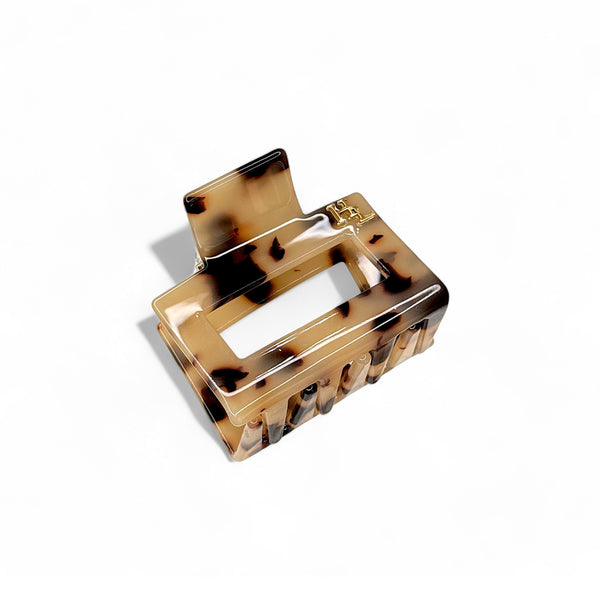
HoneyLux’s French pins, similar to hair forks, bring a curved shape and plant-based acetate cellulose together, made from cotton and wood pulp.
How to Use a Hair Fork
The technique is everything here.
Gather your hair first, whether that is a ponytail, a twist, or a bun. Twist and coil it, tucking the ends under if you need to. Slide the fork in, at an angle along the edge of the bun, catching hair close to the scalp.
Now comes the part people skip. Push the fork through the bun, then redirect it so the prongs grab more hair on the way back out. That back-and-forth is what actually locks it in place.
Push it snug, not painfully tight against your scalp. Give your head a little shake to test it. Shifting around? Reposition it, or try a different size next time.
Taking it out deserves the same care as putting it in. Reverse whatever crossing motion you used going in, rather than yanking it straight out. If you hit resistance, especially near tangles, slow down.
Why Does My Hair Fork Keep Falling Out?
Start with the fork's length. Is it actually long enough for the bun you made? Next, check where you are catching hair, close to the base, or just skimming near the surface? And is the style itself loose enough that there is nothing for the fork to grip onto?
Smooth hair sometimes needs a different angle than textured hair does. It is worth experimenting a bit.
Can You Use a Hair Fork on Wet Hair?
Not tightly, no. Wet strands stretch and break more easily, so pulling them into a firm bun while damp just adds risk. Wait until your hair is mostly dry. Still a little damp? Keep the style loose and skip the tension.
Three Hair-Fork Styles to Try
A low twist bun starts at the nape. Twist loosely, coil it into a bun, then anchor it with a fork through the center.
Want something quicker? Gather just the top section into a small bun for a half-up topknot. A smaller fork does the trick here.
For a French twist, roll your hair vertically up the back of your head and run the fork along the twist to hold it.
Keep a couple of sizes around if you bounce between these looks often.
Is a Hair Fork Worth It?

It's a different way to keep hair up entirely, one solid piece instead of a handful of pins fighting to hold the same job.
Forget price as your main measure here. Size, material, and comfort matter more, along with whether it actually fits the styles you wear day to day. A good one lasts a while, though that really comes down to the material and how often it is in use.
Caring for Your Hair Fork
Wipe away product buildup and clean it based on whatever its material calls for. Let it dry completely before you put it away and store it somewhere the prongs won't bend, away from keys and other stuff jostling around in a bag.
FAQs
Can you use a hair fork with layers?
Yes. Find where your longer layers naturally gather and make sure the fork's catching enough to hold.
How do you remove a hair fork without pulling hair?
Undo the same crossing motion you used going in, rather than pulling it straight out.
Why does my hair fork keep sliding out?
Usually the fork is too short, or it is missing enough hair, or the spot it is in just doesn't offer much support.
How many prongs should a hair fork have?
That is really up to your hairstyle and how much hair you're securing. No single number works for everyone.
Making the Switch

Buns and twists get a lot simpler with the right fork. Skip the urge to grab the biggest one on the shelf. Match it to your hair instead, then spend a little time learning the placement.
HoneyLux makes its French pins from plant-based acetate cellulose, sourced from cotton and wood pulp. The curved shape rests comfortably against your head no matter which updo you are wearing.Tired of wrestling with a handful of small pins? This might be the swap worth making.