Are Claw Clips Good for Thin Hair?
Yes, claw clips are good for thin hair. You just need the right one. Choose a small, lightweight clip with fine teeth and a moderate spring. This type holds fine strands without heavy pulling. It is also gentler than a tight elastic. The clip size is critical. One that is too big or too heavy slides out or tugs on your hair. Below, you will learn how to pick one and keep it in place. You’ll also lear how to style it well.
How to Choose the Right Claw Clip for Thin Hair?
In thin hair, there are fewer strands to grip. A clip made for thick hair often slides right off. Check these six things before you buy.
Size
Match the clip to your hair length.
- Small clips (2 to 3 inches): Good for half-up styles, front sections, and bangs.
- Medium clips (3 to 3.5 inches): Good for ponytails, buns, and updos on shoulder-length hair.
- Large clips (4 to 5.3 inches): Only for long hair, and only if the clip is light.
For shoulder-length hair or shorter, stay at 3.5 inches or under. A large clip cannot close fully on a small amount of hair. It slips out. Long hair can handle a wider clip, as long as the jaw spreads the hair across many teeth.
Weight
Heavy clips drag thin hair down. There is less hair to hold the load. The clip creeps lower as the day goes on. It also puts all the stress on fewer strands. A good target is under 15 grams, but many brands skip the weight in their listings. In that case, pick a light material and read the reviews.
Material
Material affects both weight and grip. Thin acetate is a strong choice. It is a plant-based material made from wood pulp and cotton. It stays light and holds well.
|
Material |
Weight |
Grip |
Fit for thin hair |
|
Thin acetate |
Light |
Excellent |
Great for daily wear |
|
Resin composite |
Light to medium |
Very good |
Good for secure styles |
|
Heavy plastic |
Medium |
Moderate |
Short wear only |
|
Metal hardware |
Heavy |
Poor |
Not advised |
Teeth and Grip
Teeth decide whether the clip catches fine strands. Look for these details:
- Fine spacing: Teeth about 2 to 3 mm apart grip more strands.
- Tooth count: Aim for at least 12 teeth per jaw.
- Curved teeth: An inward curve locks hair in place better than straight teeth.
- Smooth edges: Rounded, polished teeth do not snag or scratch the hair.
Wide teeth, 5 mm or more apart, slide past thin strands without gripping.
Spring Tension
On thin hair, a very strong spring can press hard on the strands. Choose a moderate, steady spring instead. A wide jaw also helps. You will not need to squeeze the clip shut to make it hold.
Your Hair Texture
Thin hair comes in different textures. Each one needs a small tweak.
- Thin straight hair: This has the least natural grip. Pick a clip with the most teeth.
- Thin wavy hair: Waves add friction. A standard fine-tooth clip works well.
- Thin curly hair: Curls grip well but break easily. Choose gentler tension and a wider jaw.
How to Keep Claw Clips in Thin Hair?
Even the right clip can slip on fine hair. These easy habits helps you avoid that.
Secure With a Base
Take a small elastic and tie your hair into a loose half-up section or a mini ponytail. Then place the clip over or just above the elastic. The elastic gives the clip something solid to sit against. The clip no longer relies on slippery strands alone.
Add Texture
Fine hair is smooth, so the clip has nothing to catch. To fix this, spray a little dry shampoo or texture spray through your hair. Focus on the roots and the section you plan to hold. You can also tease the crown lightly. The extra friction prevents strands from sliding through the teeth and adds some height at the top.
Twist Carefully
A twist helps a clip hold, but do not overdo it. A very tight twist pulls on the follicles. Fine hair breaks easily under that strain and can also cause scalp pain by the afternoon. Keep the twist loose and smooth. If the clip only stays in with a hard twist, the clip is likely the wrong size.
Start With Dry Hair
Thin hair is weaker when wet. Clipping damp strands can stretch them. Damp hair also loses grip, so the clip slips sooner. Let your hair dry fully first.
Clip at an Angle
Do not push the clip straight into the hair. Hold it at about a 45-degree angle to your scalp. Open the jaw fully. Then close it slowly so the teeth catch the hair in steps. Give the clip a gentle tug. It should resist without pulling your hair.
Can You Use Claw Clips for Thinning Hair?
Yes, you can use claw clips for thinning or fine hair. Ensure to pick the right size and style. Claw clips are often gentler than tight hair elastics. Elastics pull on fragile strands and can cause breakage. A well-made clip spreads the hold across a wider area instead.
If you notice sudden shedding or bald patches, talk to a doctor or dermatologist. It’s important to know the cause for hair thinning before styling your hair.
Best Practices for Thin Hair
- Choose the right size: Pick a mini or small clip, about 2 to 3.5 inches, for shorter hair or half-up styles. These stay put. For longer thin hair, choose a lightweight medium clip with a wide jaw.
- Look for extra grip: Pick fine teeth, an inner comb, or a strong, steady spring. These details catch thin strands.
- Add texture first: A small spritz of dry shampoo or texture spray builds friction. The clip then slides less.
- Create the look of volume: Section your hair and tease the crown gently. You can also make a mini ponytail and loop the ends back through partway. The loops add body before you clip.
- Avoid tight placement: Do not twist too hard. Do not clamp the clip high on the scalp. This protects weak follicles from pulling.
Which Claw Clips Are Best for Thin and Fine Hair?
HoneyLux makes its claw clips from plant-based acetate. The material comes from wood pulp and cotton. It is light, strong, and free of plastic. The teeth are rounded and the spring is custom made. For thin hair, two clips work well.
Ecofriendly Acetate Midi Clips

The Ecofriendly Acetate Midi Clip is a great all-rounder for fine hair. The clip is about 2 inches long and offers the tightest grip for fine, slippery hair.
Here is what you get:
- Rounded, non-slip teeth that grip without snagging
- A light build that avoids scalp pain and headaches
- A drop-proof design that holds up to daily use
- Full updos on short or fine hair, or half-up styles on medium to long hair
It comes in many shades, including Tortoise, Black, Pearl, and Honey. The price is $22 CAD.
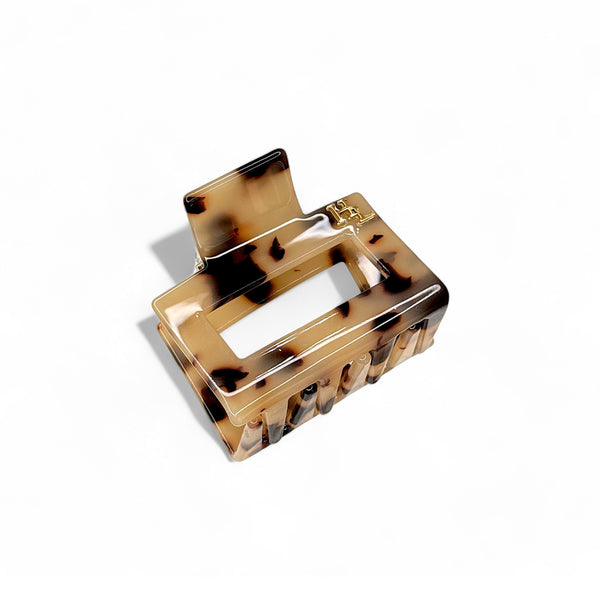
Ecofriendly Acetate Mini Square Claws

The Ecofriendly Acetate Mini Square Claws come as a set of two. Each clip measures 1 1/4 inches. Designed in Toronto, they hold all hair types, even the finest and slipperiest strands.
These small clips are perfect for numerous styles like:
- Half-up looks on short hair
- Pinning back bangs or face-framing pieces
- Securing twisted side sections
- Wearing two at once for a neat, balanced look
Small Clip, Big Hold: Your Thin Hair Has Options
Thin hair does not need to skip claw clips. Pick a light clip, a smaller size, and fine teeth. Add a little texture, use a loose base, and keep your twists gentle. With these steps, a clip can hold your style all day. It can also look polished while it does.
Frequently Asked Questions
Is it bad to wear a claw clip every day?
No, daily wear is usually fine if the clip is light and sized right. Avoid clamping it tight in the same spot every day. Change the position often. Open the jaw fully before you remove it. Give your scalp a break at night.
What are the least damaging hair clips?
Lightweight claw clips with smooth, rounded teeth and moderate spring tension are the gentlest. Plant-based acetate is a good pick. Skip heavy metal clips and sharp edges. Pick a size that closes without strain, so strands are not pinched or pulled tight.
How to make hair look better in a claw clip?
Add texture first with dry shampoo. Tease the crown lightly for height. Pull a few face-framing strands loose. Clip at a slight angle, not straight in. Use a small clip for thin hair, since big clips can look flat and leave gaps.